
Episode 55 - Career Reinvention Success: Why Going Backwards Made Dr. Ruchir Gupta Advance
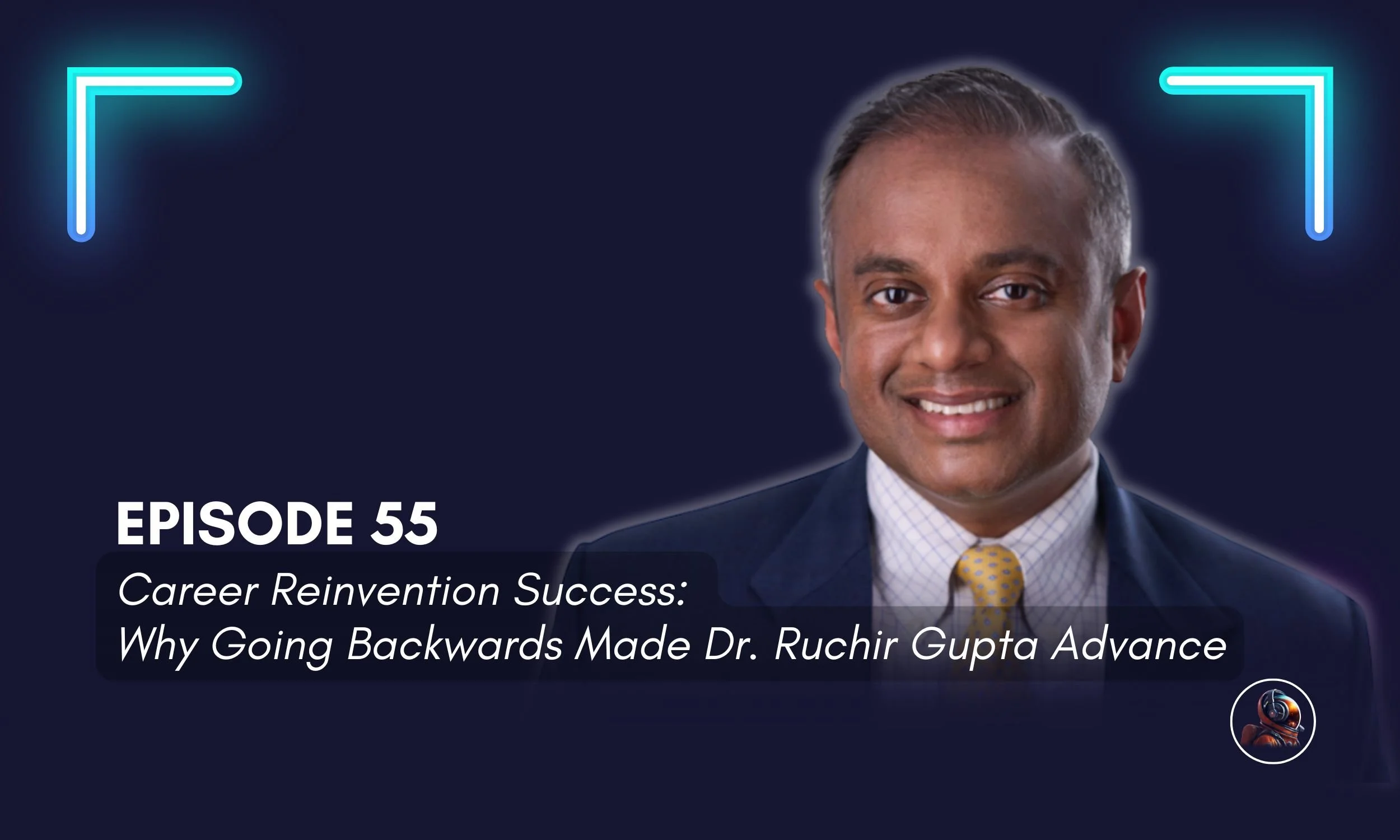
Dr. Ruchir Gupta challenges physician assumptions about entrepreneurship, shares his fibromyalgia protocols achieving 80% success rates, and explains why career reinvention made him a better clinician.
In this conversation, Dr. Ruchir Gupta shares his unconventional journey from established anesthesiologist to successful pain medicine entrepreneur. After 10 years of practicing anesthesia, he made the bold decision to return for a pain fellowship at Mayo Clinic, where he was older than most of his attendings.
Dr. Gupta's story shows how strategic career reinvention can create competitive advantages in medicine. By combining his decade of anesthesia experience with pain medicine fellowship training, he identified a market opportunity that others overlooked: IV ketamine therapy for chronic pain patients. While other pain physicians were hesitant to offer ketamine infusions due to unfamiliarity with anesthetic protocols, Dr. Gupta's background made him uniquely qualified to bridge this gap.
You'll hear about how his specialized fibromyalgia protocols achieves 80% success rates, his insights about monitoring standards including the "fifth vital sign" of proper patient follow up, and practical business advice about overcoming analysis paralysis.
Dr. Gupta's journey from zero to building Mountain View Headache and Spine Institute offers valuable lessons for any medical professional considering practice ownership or career reinvention. His approach challenges common physician assumptions about entrepreneurship and shows how leveraging existing skills can lead to practice success.
What You'll Learn in This Episode:
Career reinvention strategy: how Dr. Gupta leveraged his anesthesia background to differentiate his pain practice and why returning to fellowship training became a competitive advantage rather than a setback
Physician entrepreneurship barriers: why medical professionals create mental obstacles around private practice that dentists, chiropractors, and other healthcare providers don't experience, and how to overcome this mindset
Clinical monitoring standards: recommendations for ketamine infusion monitoring, including the importance of continuous EKG, pulse oximetry, and blood pressure monitoring for longer pain protocols
The "fifth vital sign" concept: why proper patient follow up and outcome measurement are essential for maintaining medical credibility and avoiding the "med spa" trap in ketamine therapy
Business development approach: practical strategies for practice growth including LinkedIn networking, physician education sessions, and building referral relationships with skeptical providers
Cross-disciplinary medicine benefits: why Dr. Gupta believes future physicians should combine multiple specialties or degrees to offer integrated approaches and differentiated services
Pain and mood disorder integration: clinical insights about treating patients with concurrent chronic pain and depression, including combination Spravato and ketamine protocols
Key Takeaways:
Reinvention requires strategic thinking, not just courage. Dr. Gupta's success came from identifying how his anesthesia background created competitive advantages in pain medicine, particularly with ketamine therapy that other providers avoided.
Physician mindset creates artificial entrepreneurship barriers. Unlike dentists and chiropractors who routinely start private practices, physicians have developed cultural resistance to entrepreneurship that isn't based on actual capability or market realities.
Clinical differentiation drives practice success. By offering IV ketamine when other pain doctors wouldn't, Dr. Gupta created a unique market position that generated demand for both ketamine services and traditional pain procedures.
Fibromyalgia responds differently than other conditions. His 80% success rate comes from recognizing that fibromyalgia requires different protocols than CRPS or depression, using shorter duration but potentially higher dose infusions.
Safety standards must match treatment complexity. Longer pain infusions require more comprehensive monitoring than depression protocols, including but not limited to continuous EKG and regular blood pressure checks every 15 minutes.
The "fifth vital sign" prevents med spa perception. Proper patient follow up with objective outcome measures maintains medical credibility and guides treatment decisions.
Cross-training creates competitive advantages. Combining anesthesia experience with pain medicine training allowed Dr. Gupta to offer services that single-specialty providers couldn't safely provide.
Business planning overcomes analysis paralysis. The hardest step is going from zero to one. Once you start a business plan, even imperfectly, the momentum builds and subsequent decisions become easier.
Multiple marketing channels compound results. Success came from combining LinkedIn professional networking, direct physician outreach, literature sharing, and educational presentations rather than relying on single strategies.
Listen to the episode on Apple Podcasts, Spotify, Overcast, or on your favorite podcast platform. Watch the discussion on YouTube here.


Episode 54 show notes:
00:00:00 - Teaser: The Physician Mindset Problem
00:00:31 - Episode Introduction
00:02:14 - Dr. Gupta's Background
00:02:34 - Education: From Political Science to Choosing Anesthesia
00:06:14 - The Decision to Pursue Pain Fellowship
00:08:23 - Fellowship Experience: Being Older Than Attendings
00:09:51 - Turning Setback into Asset: The Ketamine Opportunity
00:13:21 - Starting Mountain View Headache and Spine
00:16:59 - The Physician Entrepreneurship Mindset Problem
00:21:37 - Building Referral Relationships and Practice Growth
00:25:18 - Pain Fellowship Training: What's Missing
00:29:35 - Fibromyalgia Protocols and Success Rates
00:34:27 - Pain vs Mood Disorder Treatment Approaches
00:36:17 - The "Fifth Vital Sign" and Medical Standards
00:40:45 - Monitoring Standards and Safety Considerations
00:50:06 - Business Planning: From Zero to One
00:54:17 - Marketing Strategies That Actually Work
00:56:05 - Rapid Fire Questions: What's on Your Desk
00:57:42 - Relaxation and Pickleball with His Son
00:58:04 - Hidden Talent: Writing Historical Fiction
00:59:22 - Time Travel: Ancient Rome
01:01:04 - Alternative Career: Finance and Building Businesses
01:01:28 - Contact Information
01:02:04 - Final Thoughts and Show Resources
Thanks for Listening
Professional Education Disclaimer: This content is intended exclusively for licensed healthcare professionals and should not be used by patients for self-treatment or self-education. The information presented reflects individual provider experiences and should not replace clinical judgment, professional training, or comprehensive research. Healthcare providers must conduct their own due diligence, consult current literature, and evaluate treatment approaches within their specific practice context and regulatory environment. This educational content does not constitute medical advice for specific patients or clinical situations - treatment decisions should always be based on individual patient assessment and adherence to professional medical standards.
Frequently Asked Questions
Is it worth going back for additional fellowship training later in my career?
In the conversation, Dr. Gupta shared that additional training created strategic advantages for him rather than just adding credentials. The key, based on his experience, was identifying how his existing anesthesia background could differentiate him in pain medicine. His anesthesia experience made him uniquely positioned to offer ketamine therapy when other pain doctors were hesitant. The question to ask yourself: would the additional training genuinely enhance your ability to serve patients or create new opportunities, or are you just pursuing it because you're dissatisfied with your current path?
How do I know if I should start my own practice versus joining an existing group?
Dr. Gupta talked about how this decision often comes down to mindset more than actual barriers. He pointed out that other healthcare professionals like dentists and chiropractors routinely start practices without the analysis paralysis many physicians experience. Based on his experience, the key factors include your tolerance for business responsibilities, desire for creative control, and whether you've identified a genuine market need you can serve differently than existing providers.
What makes fibromyalgia patients respond differently to ketamine therapy?
According to Dr. Gupta's experience, fibromyalgia appears to be mediated by different pathways than other chronic pain conditions like CRPS. His protocols differ from standard depression treatments and longer CRPS infusions. His key insight: different pain conditions may need different treatment strategies rather than one-size-fits-all protocols. His 80% success rate with fibromyalgia came from recognizing this and adjusting his approach accordingly.
How important is having fellowship training versus learning ketamine therapy through other means?
In the episode, Dr. Gupta acknowledged that both approaches can work and that he respects physicians who learn ketamine therapy through other educational pathways. His choice of formal fellowship training reflected his preference for structured learning and the credentialing advantages it provided. His takeaway: ensure adequate education through whatever route you choose, whether formal fellowship, comprehensive courses, or mentorship programs.
What should I focus on when creating a business plan for a ketamine practice?
Dr. Gupta emphasized that the hardest step is going from "zero to one," simply starting the planning process. He suggested focusing on basic questions: identifying your referral sources, understanding local competition, calculating startup costs, and determining your marketing approach. His advice: the plan doesn't need to be perfect initially. It serves as a framework that will evolve as you gain real world experience and market feedback.
Connect with Dr. Ruchir Gupta
Links Relevant To The Episode: