
EM Physician Builds First Ketamine Clinics in New Mexico and Norway
Synopsis: Dr. Lowan Stewart is an emergency physician who opened the first ketamine clinic in New Mexico and the first in Scandinavia, fought the Norwegian Psychiatric Association alone and won, and helped Norway become the first country in the world to approve national public reimbursement for ketamine in treatment-resistant depression. This post covers his journey, the clinical insight that drove it, and what he believes every clinician in this space needs to understand right now.
Key Takeaways:
Dr. Lowan Stewart is an emergency physician who opened the first ketamine clinic in New Mexico in 2016 and the first ketamine clinic in Scandinavia in 2018.
He fought the Norwegian Psychiatric Association to keep his clinic open, helped establish the first public ketamine unit in Scandinavia, and played a central role in Norway becoming the first country in the world to approve national public reimbursement for off-label racemic ketamine for treatment-resistant depression.
His journey is one of the most instructive stories in the global ketamine therapy field, and his argument for why getting ketamine right now is the most important work in the space is one every clinician here should hear.
Professional Education Disclaimer: This content is intended exclusively for licensed healthcare professionals and should not be used by patients for self-treatment or self-education. The information presented reflects current regulatory developments and should not replace clinical judgment, professional training, or comprehensive research. Healthcare providers must conduct their own due diligence, consult current literature, and evaluate treatment approaches within their specific practice context and regulatory environment. This educational content does not constitute medical or legal advice for specific patients or clinical situations.
🎙️ THIS POST IS BASED ON
Ketamine Startup Podcast: Episode 062
Our conversation with Dr. Lowan Stewart, emergency physician, founder of Axon Klinikken in Norway, and one of the most important pioneers in the global ketamine therapy space. Listen to the full episode for the complete conversation.
Listen to the Episode →
Emergency physician Dr. Lowan Stewart opened the first ketamine clinics in New Mexico and Scandinavia, then helped Norway become the first country to approve national public reimbursement for ketamine in treatment-resistant depression. His journey offers a roadmap for emergency physicians considering ketamine therapy.
Introduction
There is a metaphor that comes up in emergency medicine that most EM physicians will relate to immediately.
You are in a boat. The boat is sinking. You have a bucket. And you bail, and you bail, and you bail. You save the person in front of you. And then there is another person. And you bail again. You make real, individual, meaningful impact on people’s lives. But the river of suffering just keeps flowing.
You are not improving the efficiency of the boat. You are not doing anything about what is upstream.
Dr. Lowan Stewart spent 17 years in that boat. He loved it. He walked into every shift thinking this is great, this is what I am supposed to be doing. He was not burned out. He did not want to leave emergency medicine. But somewhere around the time he was completing a master’s in public health, he started asking a different question.
What does work look like when it has exponential and sustainable impact? When it changes the structure of the river, not just manages the flow?
He found his answer in ketamine therapy. And what he built with that answer is one of the most remarkable stories in the global ketamine therapy field.
We sat down with Dr. Lowan Stewart on Episode 062 of the Ketamine Startup Podcast, and what he shared deserves a wider audience than any single episode can reach.

Before becoming an emergency physician, Dr. Lowan Stewart studied anthropology, researched laughter in primates, and nearly pursued space medicine in Moscow. That frontier mindset later shaped his pioneering work in ketamine therapy.
A Path That Did Not Go in a Straight Line
Before Dr. Lowan Stewart was an emergency physician, he was a cultural anthropology student who thought he might spend his career going into jungles and discovering new plants. He shifted into physical anthropology and ended up writing a bachelor’s thesis on the evolution of laughter in primates, which meant spending time tickling baby chimpanzees to measure immunoglobulins in their saliva. He was genuinely considering an MD-PhD in neuroscience until a friend who was finishing one told him plainly: you are going to end up chopping up rat brains in a lab for the rest of your career.
He pivoted to medicine instead. During his emergency medicine residency at OHSU, he met a cosmonaut over coffee at the International Space Hall of Fame in New Mexico. The cosmonaut encouraged him to come study space medicine in Moscow. Lowan went. He genuinely thought he was going to be a space doctor.
He ended up in emergency medicine for 17 years instead. He jokes now that he went from wanting to be an outer space doctor to being an inner space doctor. The frontier orientation, it turns out, never left.
Not Running Away From Emergency Medicine. Running Toward Something Bigger.
Dr. Lowan Stewart did not leave emergency medicine because he was burned out. He did not leave because the system wore him down or because he stopped loving the work. He loved it until the last shift.
What changed was the question he was asking.
During his master’s in public health, he did a deep dive into the global burden of mental health disorders. He started thinking about what it would mean to do something that had exponential impact and could change systems rather than just treating individuals
Around that same time, the psychedelic renaissance was beginning to gain real academic traction. He thought it might make an interesting thesis topic. He started reading about ketamine specifically. And what he found was a drug that was already legal, already known and trusted in emergency medicine, and already demonstrating in early trials that it could do something no antidepressant had done before: produce meaningful relief within hours in patients who had failed everything else.
He did not need a new frontier to chase. He had found one.

Dr. Stewart opened the first ketamine clinic in New Mexico in 2016 and the first in Scandinavia in 2018, all while continuing to work in emergency medicine. Building ketamine clinics on two continents required both clinical rigor and a tolerance for working before the consensus arrived.
Two Frontiers, Two Clinics
In 2016, Dr. Lowan Stewart and a colleague opened the first ketamine clinic in the state of New Mexico in Santa Fe. He was still working in the ED at the time. He was still commuting back and forth between the United States and Norway, where he had been living with his family for years. He would work a night shift in the emergency department, sleep for a few hours, go see a patient in the ketamine clinic, have a cup of coffee, and go back to the night shift.
He describes the schedule during that period as a little wild. That is an understatement.
Two years later, in 2018, he opened Axon Klinikken in Oslo, the first ketamine clinic in Scandinavia. The ketamine world at that point was, by his description, quite small. A Google group with maybe 100 people scattered across the globe, trading notes on how to do this work in the absence of any established playbook.
When the Psychiatric Association Came After Him
Three months after opening Axon Klinikken in Norway, Dr. Lowan Stewart received a letter from the Norwegian Medical Board. It had been prompted by the Norwegian Psychiatric Association. The message was direct: what you are doing is experimental, academically indefensible, and we are not ready for this.
He wrote back with a 25-page document. He summarized every meta-analysis he could find. He included close to 100 references to clinical trials. He made the case methodically and completely.
The Medical Board responded to the Psychiatric Association with a clear conclusion: on every single point, what Dr. Stewart is doing is defensible. He is obtaining proper informed consent. He is doing good work. The complaint was closed.
There is a clinical anecdote from this period that stays with you. Dr. Stewart had been trying to establish a protocol at the hospital where he was still working in the ED: give suicidal patients who were medically cleared a dose of ketamine before psychiatric admission. The chief psychiatrist resisted. He kept presenting the data. She kept saying they were not ready.
Then she told him why she was really resistant. Patients were coming in suicidal. By the time she saw them the next morning, they were fine. And she did not know what to do with them.
She did not know what to do with them because they were better.
That is the story of ketamine resistance in a single anecdote. The treatment was working so well it disrupted the existing clinical paradigm.
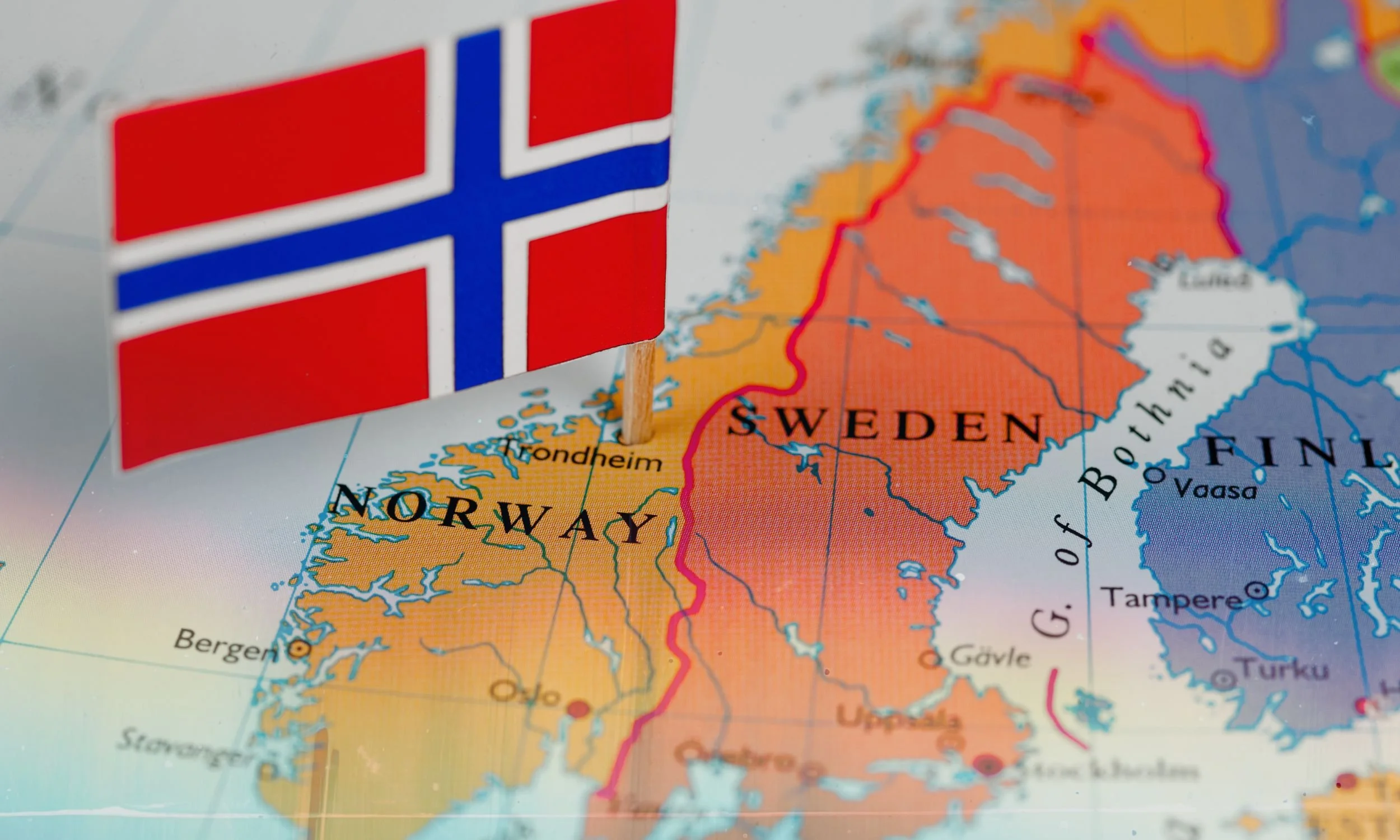
In August 2025, Norway became the first country in the world to approve national public reimbursement for off-label racemic ketamine for treatment-resistant depression. The approval followed a multi-site trial across 10 major hospitals and a national review concluding ketamine is as effective as ECT, or better.
Norway Makes History
In August 2025, Norway became the first country in the world to approve national public reimbursement for off-label racemic ketamine for treatment-resistant depression in the public healthcare system.
This is not a small thing. In most of the world, including the United States, ketamine remains cash pay, available in private clinics to patients who can afford it, with sporadic and inconsistent insurance coverage depending on geography and circumstance. Norway made it available to everyone.
The path to that moment did not happen by accident. Dr. Lowan Stewart had spent years advocating for access in the public system, training clinicians, presenting at hospitals and universities, and applying political pressure in a healthcare system that tends to move slowly. He also made a strategically brilliant move: rather than waiting for reimbursement approval to arrive before implementing ketamine in public hospitals, he designed a multi-site randomized controlled trial that required 10 of Norway’s major hospitals to establish ketamine units in order to participate.
To run the trial, you had to set up the infrastructure. And once the infrastructure was in place, the hospitals could use it. The trial became a de facto implementation across an entire country. A national registry now collects data on outcomes, protocols, and integration approaches across all participating sites. Different hospitals are using different psychotherapy modalities alongside ketamine, and that variation will yield genuinely useful comparative data over time.
The Norwegian medicines agency published a 170-page review concluding that ketamine is equally if not more effective than ECT for treatment-resistant depression, costs approximately half as much, is better tolerated by patients, and is preferred by patients over ECT. National reimbursement followed.
One physician. One clinic. Over a decade of sustained advocacy. A country changed its policy.
Why Getting Ketamine Right Now Is the Most Important Work in the Field
Psychedelic conferences are full of conversations about what is coming: psilocybin, MDMA, DMT, LSD, 5-MeO. The excitement is real and the potential is significant. But there is a problem with the assumption that these treatments can simply be switched on once they are approved.
They cannot.
The infrastructure required to deliver psychedelic-assisted therapies safely and effectively does not exist at scale. The training does not exist. The treatment rooms do not exist. The clinical culture does not exist. The protocols have not been established in the public system. The integration practices have not been standardized. None of that work has been done in a way that will allow these treatments to be available to the populations who need them most once approval arrives.
Ketamine is the opportunity to do that work now.
The training, the rooms, the protocols, the clinical culture, all of it is transferable. If something else gets approved, as Dr. Stewart puts it, you can plug it in. A practice that has been running ketamine thoughtfully for years will be able to offer a new treatment in a way that a practice starting from scratch simply cannot. And more importantly, a public healthcare system that has established infrastructure for ketamine can extend that infrastructure to other treatments. One that has not will face enormous barriers.
If we cannot get it right with ketamine, we cannot get it right with anything that comes after. That is his argument. We think it is a good one.

Dr. Stewart’s advice for clinicians considering a ketamine clinic: it is a lot of work, and it is worth it. Ketamine therapy shifts the focus from the quantity of life to its quality, restoring meaning, hope, and connection for patients who have suffered for years.
One Piece of Advice
We asked Dr. Lowan Stewart what he would tell a clinician who is considering opening a ketamine clinic but has not yet made the decision. He said it was hard to give just one piece of advice. Then he gave one anyway.
It is worth it.
He talked about the learning curve on the business side, the clinical side, the academic side. He talked about the work of coming into a new field, even for an EM physician who already knows ketamine cold. He did not minimize any of it.
But then he said something that we want to make sure does not get lost.
In emergency medicine, the focus is on quantity of life. You start someone’s heart and you send them back to a life that may still be miserable. You do important work. But you are not necessarily improving the experience of being alive.
With ketamine therapy, the focus shifts. You are working on quality of life. You are focused on meaning and hope and the capacity to feel connection and joy. You are working with people whose lives have been defined by suffering for years, sometimes decades, and you are offering them something that might actually change that.
The first time you see someone who genuinely wanted to end their life decide that they want to keep living, he says, you cannot not do this. You cannot see that and walk away from the possibility of doing it again.
That is the work. That is what is upstream of the river.
If this resonated, these posts are worth your time as well.
The Case for Emergency Physicians Opening a Ketamine Clinic: Evidence, Honesty, and Finding Your Why
The practical companion to this post. If Dr. Lowan Stewart’s story made you think about your own path, this is where to go next. Clinical evidence, the EM skills advantage, and the honest financial picture.
What If Ketamine Therapy Works Better When the Brain Is Active?
A newly published hypothesis from one of the world’s leading NMDA receptor researchers challenges how clinicians think about what is happening during a ketamine session. Worth reading alongside Dr. Lowan’s thoughts on getting the clinical practice right.
What Should Ketamine Therapy Patients Listen to During a Session?
Dr. Lowan mentions using music, eye shades, and mindfulness induction as part of his standardized protocol in Norway. This post covers the clinical reasoning behind music selection in ketamine therapy.
Professional Education Disclaimer: This content is intended exclusively for licensed healthcare professionals and should not be used by patients for self-treatment or self-education. The information presented reflects individual provider experiences and should not replace clinical judgment, professional training, or comprehensive research. Healthcare providers must conduct their own due diligence, consult current literature, and evaluate treatment approaches within their specific practice context and regulatory environment. This educational content does not constitute medical advice for specific patients or clinical situations - treatment decisions should always be based on individual patient assessment and adherence to professional medical standards.
Frequently Asked Questions
Who is Dr. Lowan Stewart?
Dr. Lowan Stewart is an emergency physician who has been based in Norway for over 16 years. He opened the first ketamine clinic in New Mexico in 2016 and the first ketamine clinic in Scandinavia in 2018 through his practice Axon Klinikken in Oslo. He has also established a psychedelic research unit in a public Norwegian hospital, helped design and implement a multi-site ketamine trial across 10 major Norwegian hospitals, and played a central role in Norway becoming the first country in the world to approve national public reimbursement for racemic ketamine in treatment-resistant depression.
What is Axon Klinikken in Norway?
Axon Klinikken is a private ketamine therapy clinic in Oslo, Norway founded by Dr. Lowan Stewart in 2018. It was the first ketamine clinic in Scandinavia and currently operates out of a purpose-designed clinical space in Oslo with multiple treatment rooms and a post-treatment integration lounge. The clinic was briefly acquired by Awaken Life Sciences before Dr. Stewart and colleagues bought it back. It continues to operate alongside a public ketamine unit that Dr. Stewart helped establish at a Norwegian hospital.
Is Norway the first country to reimburse ketamine for depression?
Yes. In August 2025, Norway became the first country in the world to approve national public reimbursement for off-label racemic ketamine for treatment-resistant depression within the public healthcare system. This followed a four-year health technology assessment by the Norwegian medicines agency that concluded ketamine is equally if not more effective than ECT, costs approximately half as much, is better tolerated by patients, and is preferred by patients over ECT. The approval means ketamine is now available to all Norwegian patients with TRD through the public system, not only those who can afford private care.
Why are emergency physicians well suited to open ketamine clinics?
Emergency physicians bring several directly transferable competencies to ketamine clinic practice: procedural familiarity with ketamine itself, comfort monitoring patients through dissociative states, clinical experience with the patient populations most likely to benefit from ketamine therapy including those with depression, PTSD, chronic pain, and suicidal ideation, and schedule flexibility that allows them to build a private practice alongside hospital-based work. Dr. Lowan Stewart is one of several prominent ketamine clinic founders who came from an emergency medicine background.
What is the argument for ketamine as infrastructure for future psychedelics?
Dr. Lowan Stewart argues that the training, clinical culture, protocols, and physical infrastructure required to deliver psychedelic-assisted therapies safely cannot be built overnight once other substances are approved. Ketamine provides the opportunity to build that infrastructure now. A clinic or public unit that has been running ketamine thoughtfully has treatment rooms, trained staff, integration protocols, and clinical experience with non-ordinary states of consciousness that will transfer directly to other treatments when they become available. Getting ketamine right, in his view, is a precondition for getting everything that comes after right.

Dr. Lowan Stewart went from EM physician to pioneer of ketamine therapy on two continents. His story holds a lesson for every clinician considering this path.


Dr. Lowan Stewart went from EM physician to pioneer of ketamine therapy on two continents. His story holds a lesson for every clinician considering this path.