
Why Analog Content Works for Ketamine Clinics
Here's a marketing trend you can use right now, and it barely requires any creative lift. Analog is having a moment on social media, and it happens to be a perfect fit for content you are probably already living.
📋 SYNOPSIS
A look at why screen-free "analog" activities are trending on social media, and a simple framework for turning the analog habits you already have into authentic, on-brand content for your clinic.
💡 KEY TAKEAWAYS
- Analog, meaning screen-free activities like journaling, board games, or crafting, is trending across generations right now.
- Pairing an analog activity you genuinely enjoy with a light connection to your clinic's work creates content that's authentic and on-trend at the same time.
- Analog activities aren't just a content strategy. They're a low-lift way to build presence and connection for both you and your patients.
Professional Education Disclaimer: This content is intended for professional and business education purposes for healthcare providers and clinic owners. It is not clinical, legal, or financial advice for your specific practice.
Journaling, board games, and other screen-free habits are trending again, and for good reason.
What "Analog" Actually Means (And Why It's Suddenly Everywhere
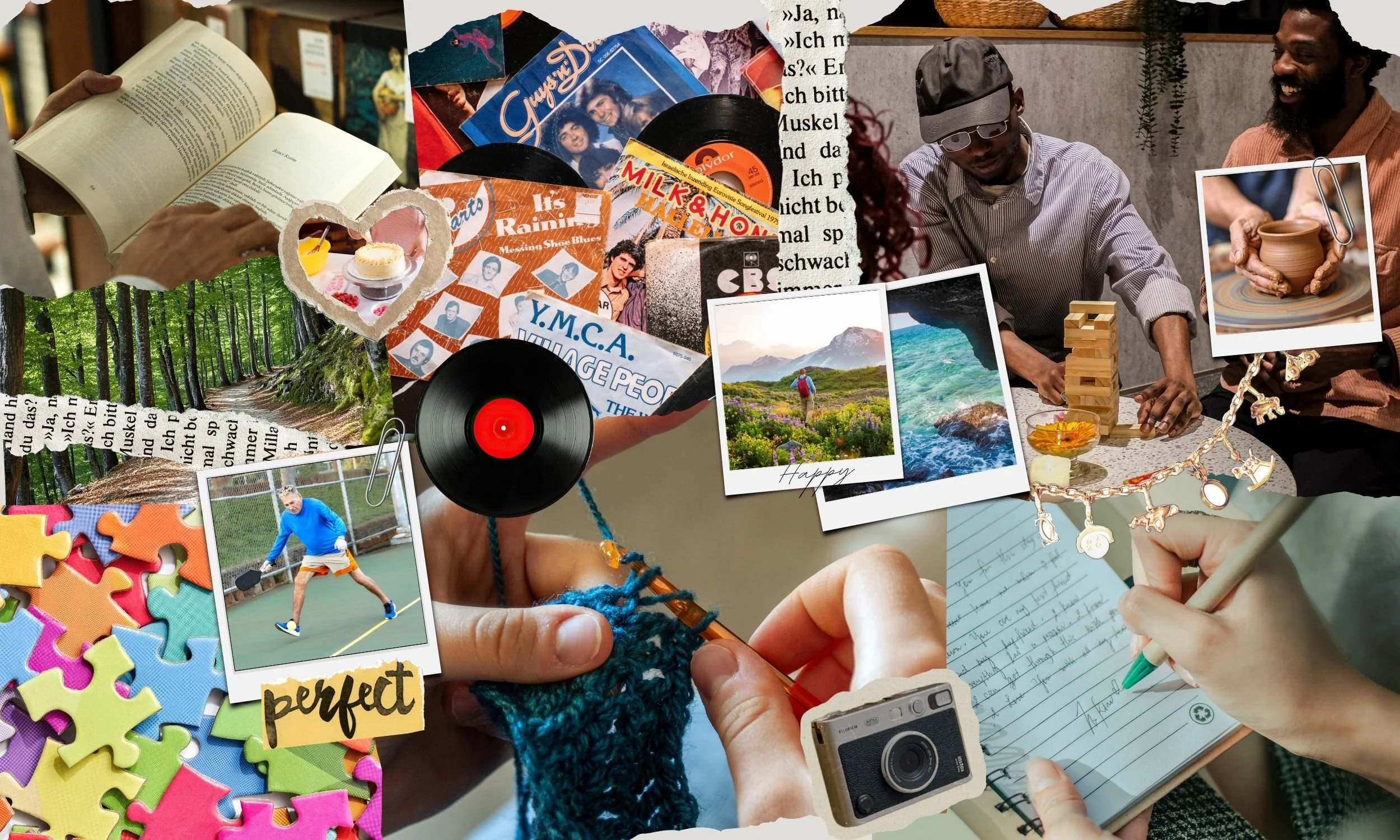
Analog describes a return to tangible, screen-free experiences, like journaling, board games, crafting, reading print books, or meeting in person, as a counterbalance to digital overload. It's not just a Gen Z thing either. People across every generation are getting tired of the screen.
The algorithm is everything, feeding you what it thinks you want with ease and without friction. Crocheting doesn't autoplay. Scrapbooking doesn't have notifications. The friction and slow pace are the magic.
We still love our screens, and they hold an important place in all our lives. The screen carried us through COVID. It kept us entertained, informed, and connected to the people we love, and it still does.
But there's a growing pull in the other direction: getting out, getting offline, and getting connected in real life. People want to slow down and hold something in their hands again, a book, a chess piece, a puzzle piece sliding into place.
Why This Trend Matters for Your Clinic's Marketing
People find you on their screen, and they stay there when what you offer is relevant and valuable. That's true before someone is your patient, not just after. Relevant, valuable content is what attracts the right patients to your practice in the first place, and right now, what's relevant is analog.
This works in your favor more than you might realize. You're likely already guiding your patients toward analog habits: meditate, get into nature, take a walk, build integrative practices into the time between and after treatment.
And on a personal level, you're probably practicing some version of that yourself, whether it's morning pages, the gym, or just making it to your kid's game. All analog. Which means you already have the raw material for content that's authentic to you, on-trend, and the best part, it doesn't require much planning, aka it's quicker to launch.
Turn a hobby you already love into content your future patients want to see.
Turning Your Analog Life Into Content
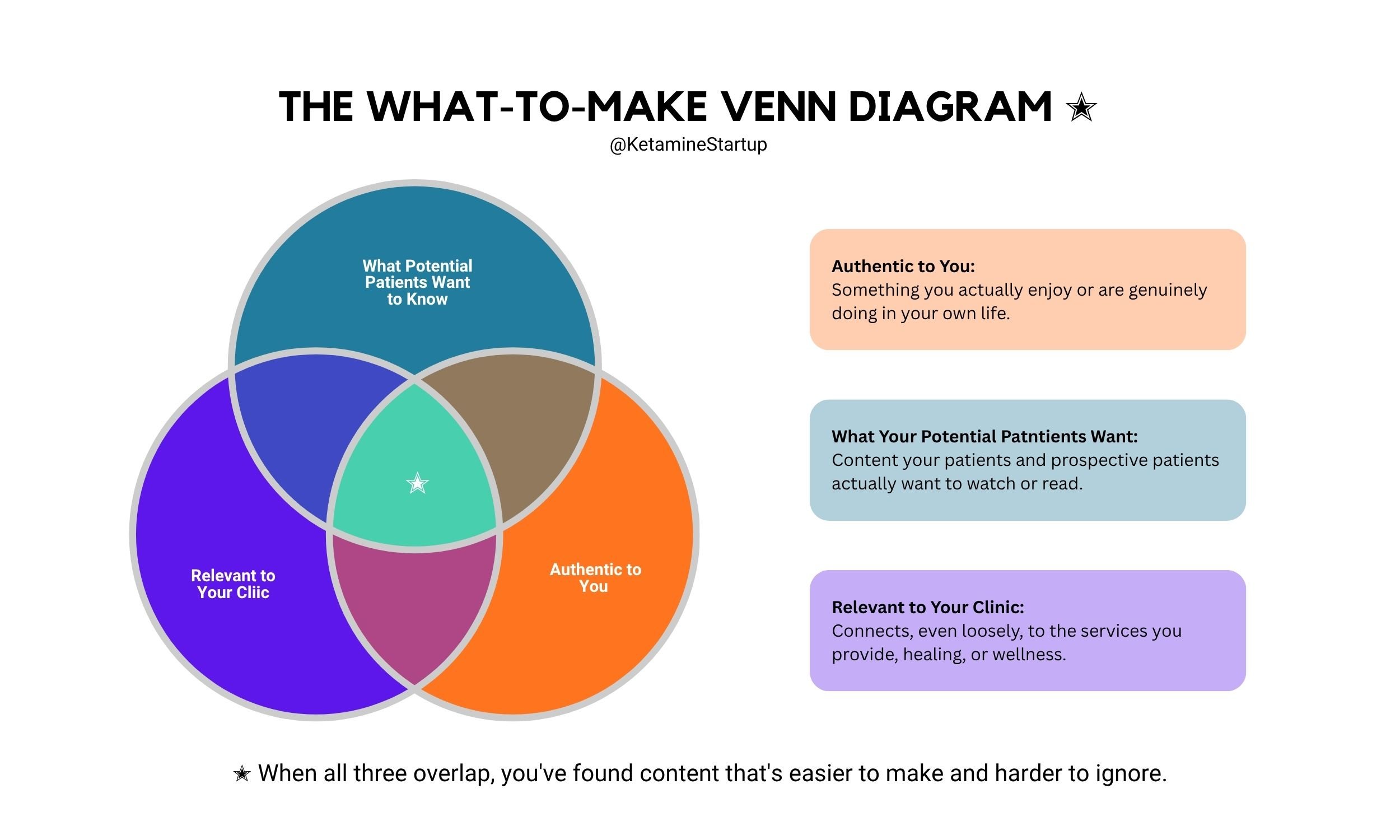
This is where our What-To-Make Venn Diagram comes in handy. This frame is something we've spoken and written about in the past. But now we're here to evolve it. Effective, valuable content sits at the overlap of three things:
It's authentic to you
It's something your audience actually wants
It connects, even loosely, to ketamine therapy, healing, or wellness, aka relevant to your clinic
Let's say you love jigsaw puzzles. Film yourself working on one. Grab your partner, your medical assistant, or the neighbor kid who thinks they're an influencer to shoot it from a few angles. Then record a voiceover about how the brain is a bit like a puzzle, and how treatment can help the pieces come together. It doesn't need to be perfect. If you love puzzles enough to be doing this anyway, you'll figure out the script, or let AI draft a starting point.
The puzzle idea is just one entry point into this analog trend. A few other pairings that work the same way:
Gardening, paired with either an explanation of how ketamine works or a reflection on how growth, like healing, can be slow and come with setbacks.
Cooking, paired with a comparison: the right ingredients in the right order matter in the kitchen, just as the correct dosing and protocol matter in each patient's treatment.
Knitting or needlework, paired with a note on how repetitive, rhythmic handwork can support nervous system regulation or serve as an alternative meditative practice.
None of these need to be a stretch or a long, drawn-out monologue. It can be as simple as a single sentence connection. What matters is that the activity is real and the tie-in is honest, not forced.
Analog Activity Ideas for Clinic Content
No new hobbies required, just a new way to talk about what you already do.
| Analog Activity | Content Angle | Time/Effort to Film | Sample Caption or Hook Line |
|---|---|---|---|
| Jigsaw Puzzles | Compare the brain working through a puzzle to how treatment helps the pieces come together. | 10 to 15 minutes, film while you work a puzzle you'd be doing anyway. | "Watch how the pieces eventually click into place. That's what we're working toward in treatment too." |
| Gardening | Compare slow, sometimes uneven growth in the garden to the pace of healing, including setbacks. | 5 to 10 minutes, capture during regular yard time. | "Healing isn't always linear. Neither is a garden." |
| Cooking From Scratch | Compare using the right ingredients in the right order to correct dosing and protocol. | 10 to 20 minutes, film while prepping a meal you're already making. | "The right ingredients, the right order. Sound familiar?" |
| Knitting or Needlework | Note how repetitive, rhythmic handwork can support nervous system regulation. | 5 to 10 minutes, film a few rows of stitching. | "One stitch at a time. One session at a time." |
Kim's Take: What Crafting Taught Me
I'll speak for myself here. Watercoloring, charm bracelets, the kind of crafting that started as an activity for our craft-obsessed kid. At some point it stopped being just a kid activity and became something I found genuinely meditative. My mind cleared when I was painting swirls or knotting macrame. I found myself craving craft time and started looking for more of it, including craft days at art museums, which are leaning into this trend too.
Recently I made charm bracelets with my sister, and the conversation we had went deeper than the ones we usually have over coffee. I truly believe there is something about working with our hands that pulls us into the present and slows us down.
So this analog trend isn't only a content strategy. Slowing down with an analog activity, alone or with someone else, has its own special kind of value.
Presence and Connection Are the Real Outcome
In our experience, patients tend to do better when their care includes genuine presence, and when they leave treatment with tools they can use to build presence and connection in their own life.
An analog activity, one you actually enjoy, can be exactly that kind of tool. It can be the permission you give patients to try one out themselves. Now, of course, this alone won't solve all their problems, but it's a nice complement to more traditional mindfulness practice.
And it's something patients can do with others to foster connection, or alone to cultivate connection with themselves.
If you liked this post, you'll probably like these too:
Why Your Ketamine Clinic Needs Video Content (And How to Create It)
Video builds trust faster than almost any other format, and you don't need fancy equipment to do it well. This guide walks through a simple 5-step process for creating authentic videos that attract referrals, plus why consistency beats perfection every time.
Content Marketing for Ketamine Clinics: What to Create and Why
The analog trend is really just one application of a bigger idea: content that pulls the right patients toward you instead of pushing generic ads at everyone. This post breaks down push vs. pull marketing and introduces the What-To-Make framework behind it.
How to Create Ketamine Clinic Content Consistently (Without Burnout)
Filming one puzzle video is easy. Doing it every week without burning out is the real challenge. This one covers the 4-step system for turning a single piece of content into dozens of marketing pieces.
Professional Education Disclaimer: This content is intended for healthcare providers and clinic owners for professional and business education purposes. It reflects individual provider experience and general marketing strategy, not legal, financial, or regulatory advice for your specific practice. Providers should evaluate any approach within their own practice's regulatory and compliance context before implementing it.
Frequently Asked Questions
What does "analog" mean in clinic marketing?
Analog describes a return to tangible, screen-free experiences, like journaling, board games, crafting, reading print books, or meeting in person, as a counterbalance to digital overload. Content built around these activities is currently resonating well across social platforms.
Why is analog content performing well right now?
Algorithms are built to remove friction, feeding people exactly what they expect with no effort required. Analog activities do the opposite. A puzzle piece doesn't autoplay and a journal page doesn't send a notification, and that slower, more deliberate pace is part of what makes the content stand out.
Do I need to be comfortable on camera for this to work?
Not at all. In fact, this is a great option if you'd rather not do a polished, straight-to-camera pitch. A short video with the camera focused on your hands doing the activity, with you simply narrating over it, works really well.
Isn't this just the same advice as "practice self-care"?
Not quite, since on the surface it can look like another piece of self-care content. Rather, you're leveraging the slow-paced, hands-on analog activities that are currently trending on social media. Plus, you're looking at an activity you already enjoy or are experimenting with, and turning it into content that's relevant to your potential patients while staying authentic and true to you.
How do I fit this into an already busy schedule?
Start with something you're doing anyway. Filming a one-minute video of an activity you're already doing simply requires remembering to hit record, plus a little extra time to script and record your narration. The whole point is to leverage what you're already enjoying, which keeps the extra work to a minimum.
If you want to get meta about it, this post is the example. We took the analog trend, talked about something one of us is genuinely passionate about (crafting, for Kim), and made it relevant to you. Now it's your turn. Try it, and let us know how it goes.
Analog content, like journaling, crafting, and puzzles, is outperforming polished posts. Here's why it works so well for ketamine clinic marketing.

A review of the latest RCTs and meta-analyses on ketamine and esketamine for postpartum depression, including key evidence gaps and practice implications.